0

It is a project that was conceived of, designed and implemented in a spirit of partnership, with each party bringing their specific expertise and knowledge to bare. The site welcomes many students from the King Saud University but also from France. They learn the basics of the trade together. The evident spirit of cooperation underpinning the project is very much due to the friendship and mutual respect between the two co-directors, who have known each other for many years and wanted to build a project in common that would further strengthen their collaboration over the long term.

How does the Franco-Saudi collaboration operate?

As in any archaeological mission, the approach is resolutely multidisciplinary, ranging from the ceramologist to the archaeozoologist, the epigraphist, the topographer,

the historian and of course the excavator.

What types of expertise are being mobilized for this mission?

The issues are multiple and fascinating: it is a question of understanding the genesis, the development and the functioning of a major city in the North-West of Arabia in the 1st millennium BC, and of defining from the archaeological remains the structure of the Dadanite and then Lihyanite societies. Up to now we have only known what has been previously derived from epigraphic sources. The excavations carried out by the Franco-Saudi mission have revealed a sacred funerary area at the foot of the cliff with many artefacts preserved in situ (statuettes, offering tables, etc.) and a residential area from the end of Antiquity (around the 4th century AD) at the southern edge of the site. In addition, there were several phases of occupation in the sanctuary around the area of the main building and a colossal statue, completing the ten already known of. Finally, at the top of Jabal al-Khuraybah, there are clear indicators of significant human occupation during the 1st millennium but also during later phases, which demonstrates that passage through the AlUla valley was not only horizontal but also vertical.

What are the challenges of the archaeological missions carried out in Dadan and what have we already discovered there?

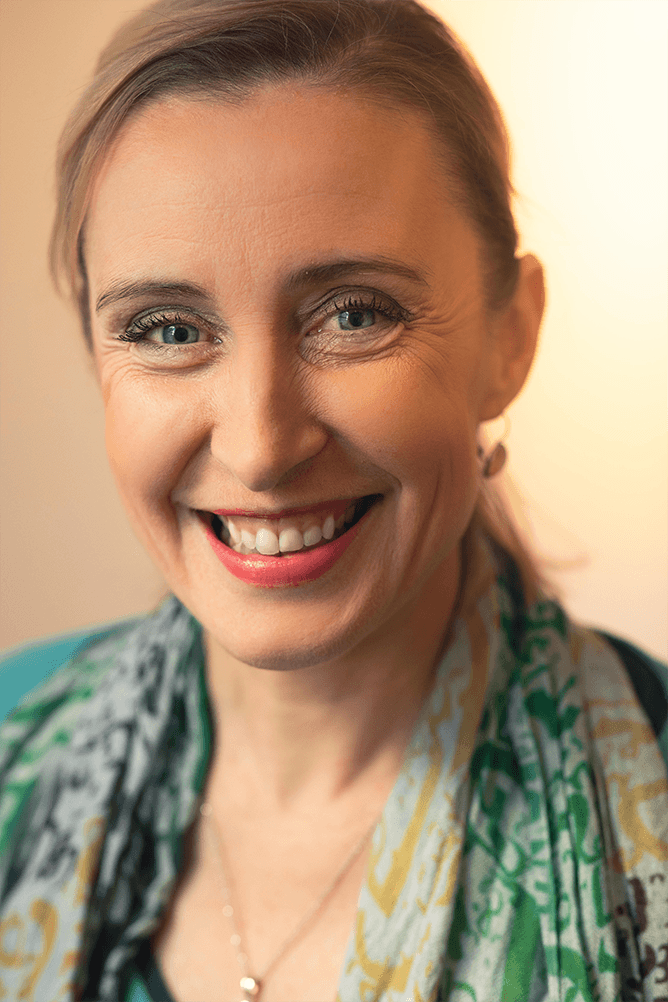
Director of Archaeology

& Heritage

INGRID

PÉRISSÉ-VALÉRO

3 QUESTIONS TO ...

Scroll

The issues are multiple and fascinating: it is a question of understanding the genesis, the development and the functioning of a major city in the North-West of Arabia in the 1st millennium BC, and of defining from the archaeological remains the structure of the Dadanite and then Lihyanite societies. Up to now we have only known what has been previously derived from epigraphic sources. The excavations carried out by the Franco-Saudi mission have revealed a sacred funerary area at the foot of the cliff with many artefacts preserved in situ (statuettes, offering tables, etc.) and a residential area from the end of Antiquity (around the 4th century AD) at the southern edge of the site. In addition, there were several phases of occupation in the sanctuary around the area of the main building and a colossal statue, completing the ten already known of. Finally, at the top of Jabal al-Khuraybah, there are clear indicators of significant human occupation during the 1st millennium but also during later phases, which demonstrates that passage through the AlUla valley was not only horizontal but also vertical.

What are the challenges of the archaeological missions carried out in Dadan and what have we already discovered there?

It is a project that was conceived of, designed and implemented in a spirit of partnership, with each party bringing their specific expertise and knowledge to bare. The site welcomes many students from the King Saud University but also from France. They learn the basics of the trade together. The evident spirit of cooperation underpinning the project is very much due to the friendship and mutual respect between the two co-directors, who have known each other for many years and wanted to build a project in common that would further strengthen their collaboration over the long term.

How does the Franco-Saudi collaboration operate?

As in any archaeological mission, the approach is resolutely multidisciplinary, ranging from the ceramologist to the archaeozoologist, the epigraphist, the topographer, the historian and of course the excavator.

What types of expertise are being mobilized for this mission?