0

lichens an atlas of microscopic life (photo 2)
lichens an atlas of microscopic life (photo 3)
lichens an atlas of microscopic life (photo 4)
lichens an atlas of microscopic life (photo 5)
lichens an atlas of microscopic life (photo 6)
lichens an atlas of microscopic life (photo 7)

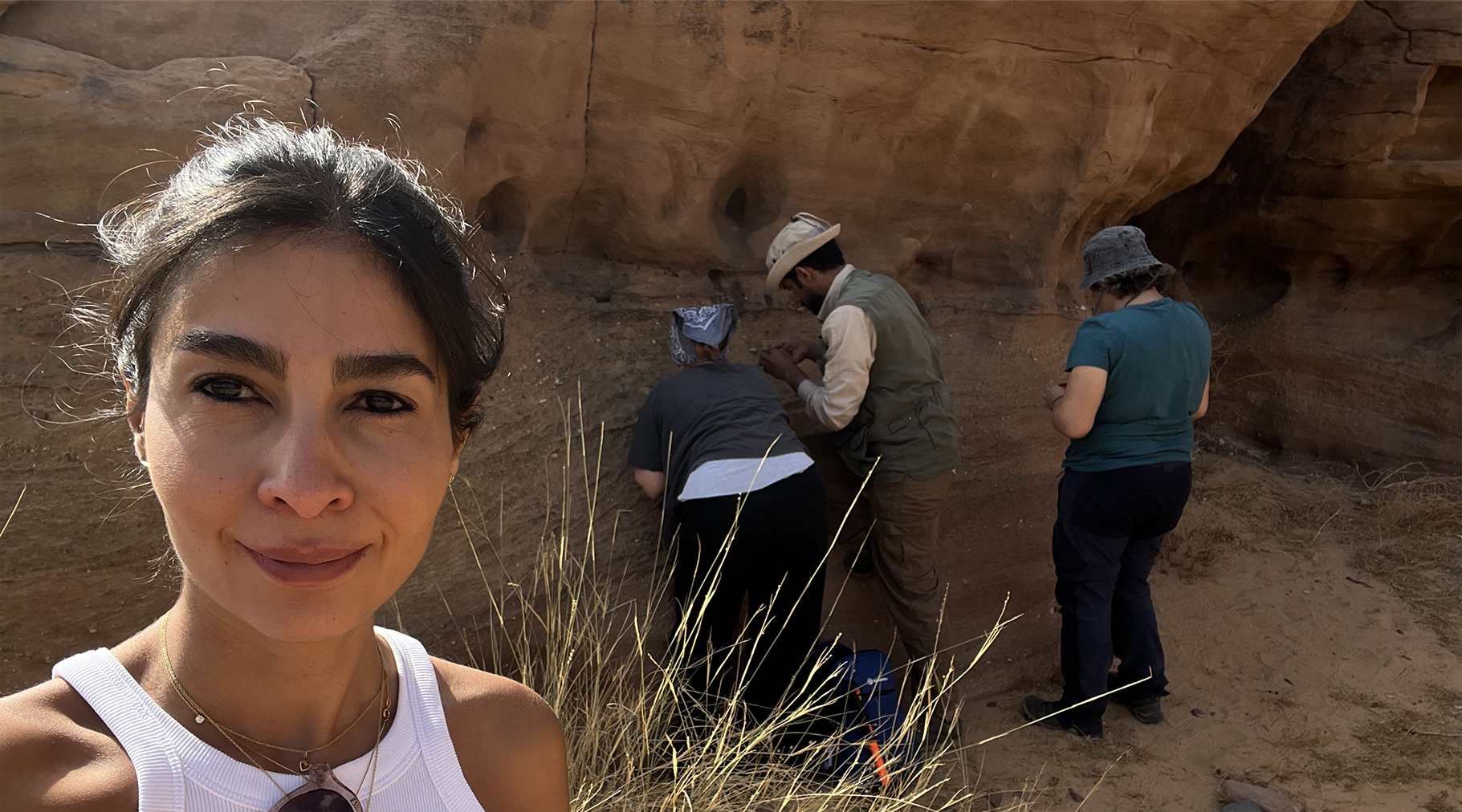
First and foremost, surveying lichens helps document a component of biodiversity

that has long been understudied in the region. The survey conducted in AlUla

and Khaybar between 2024 and 2025 established 132 sampling sites and

resulted in the collection of more than a thousand specimens, making it

possible to record more than a hundred taxa. These data now provide

a primary scientific reference for a better understanding

of species distribution and identifying taxa of particular

conservation interest. Lichens can also serve as

bioindicators of environmental quality,

particularly air quality, due to their sensitivity

to atmospheric pollutants. The analysis of

the inventory results includes the development

of a lichen rarity index adapted to the region.

This index will help prioritize conservation

actions and identify potential

micro-reserves dedicated

to lichens and their habitats.

First and foremost, surveying lichens helps document a

component of biodiversity that has long been understudied

in the region. The survey conducted in AlUla and Khaybar

between 2024 and 2025 established 132 sampling sites

and resulted in the collection of more than a thousand

specimens, making it possible to record more than

a hundred taxa. These data now provide a primary

scientific reference for a better understanding of

species distribution and identifying taxa of particular

conservation interest. Lichens can also serve as

bioindicators of environmental quality, particularly

air quality, due to their sensitivity to atmospheric

pollutants. The analysis of the inventory

results includes the development of a

lichen rarity index adapted to the region.

This index will help prioritize conservation

actions and identify potential

micro-reserves dedicated

to lichens and their habitats.

REVEALING LITTLE-KNOW BIODIVERSITY


« Lichens  

do not draw  

water from the soil:  

they capture it from the air,  

and the rest of the time,  

they just wait.»  

lichens an atlas of microscopic life (photo 8)

FIND OUT MORE

THE LICHENS

ATLAS
lichens an atlas of microscopic life (photo 9)
lichens an atlas of microscopic life (photo 10)

WATCH THE VIDEO

Rana El Zein,

Deputy Director of Natural Heritage and Biodiversity

at the French Agency for AlUla Development (AFALULA),

presents the Atlas project

« Deserts are not places where organisms die,

but rather places where organisms succeed with less. »

« Deserts are not places

where organisms die,

but rather places where organisms succeed with less. »

LIFE FINDS A WAY


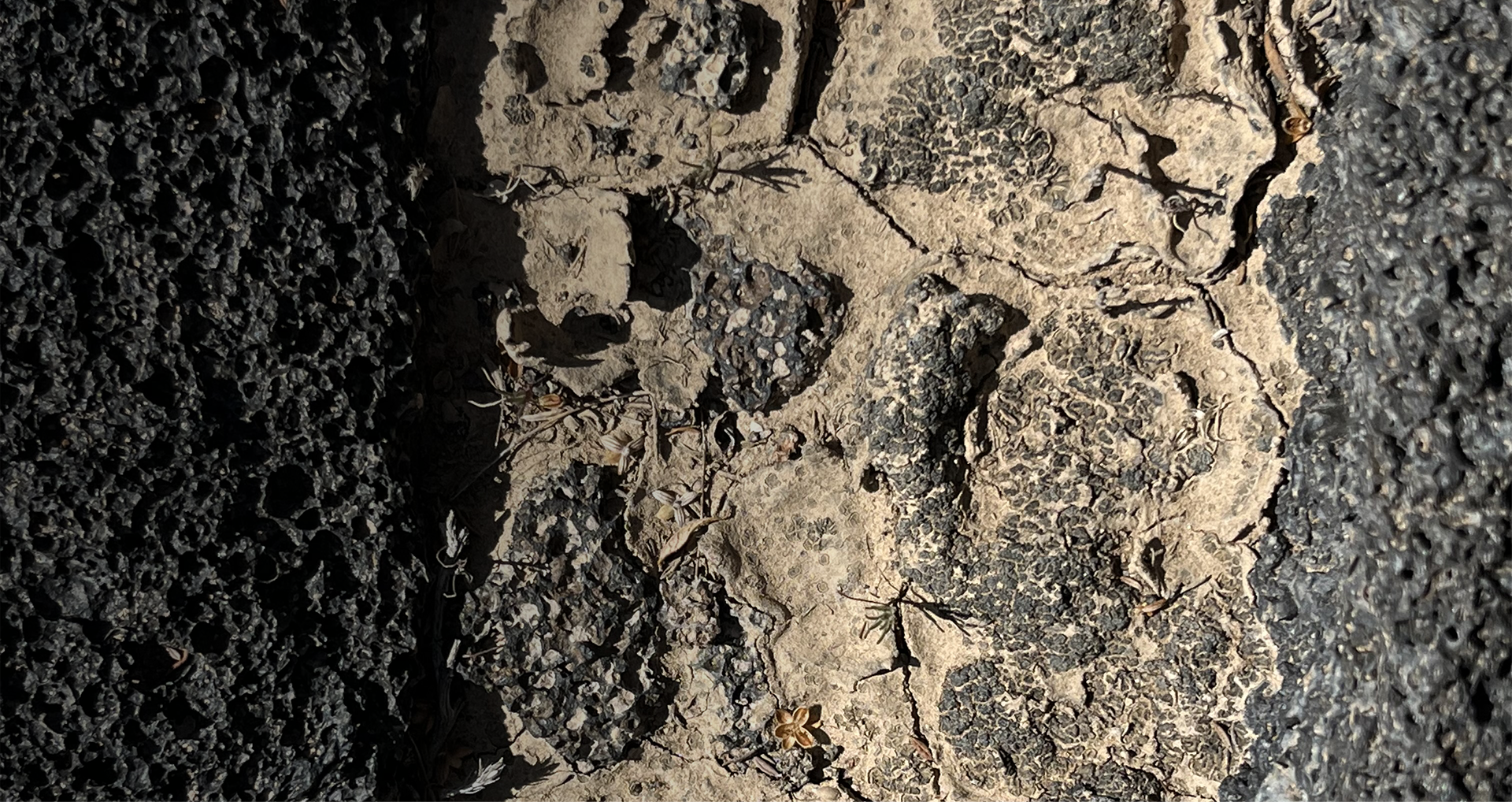
Lichens are frequently the first organisms to colonize freshly exposed rock,

gradually altering it over time and directly contributing to soil formation.

Along with bryophytes, cyanobacteria, and other microorganisms,

lichens contribute to the formation of "biological soil crusts"

in desert environments. These crusts help stabilize soils,

promote water infiltration and contribute to nutrient

cycling including through the fixation of atmospheric

nitrogen. Preserving these communities

is therefore essential to the functioning

and resilience of desert ecosystems,

particularly in the context

of ecological restoration

programs.

Lichens are frequently the first organisms to colonize freshly

exposed rock, gradually altering it over time and directly

contributing to soil formation. Along with bryophytes,

cyanobacteria, and other microorganisms, lichens

contribute to the formation of "biological soil crusts"

in desert environments. These crusts help stabilize

soils, promote water infiltration and contribute

to nutrient cycling including through

the fixation of atmospheric nitrogen.

Preserving these communities is

therefore essential to the functioning

and resilience of desert ecosystems,

particularly in the context of

ecological restoration programs.

PIONEERS OF ARID

ENVIRONMENTS


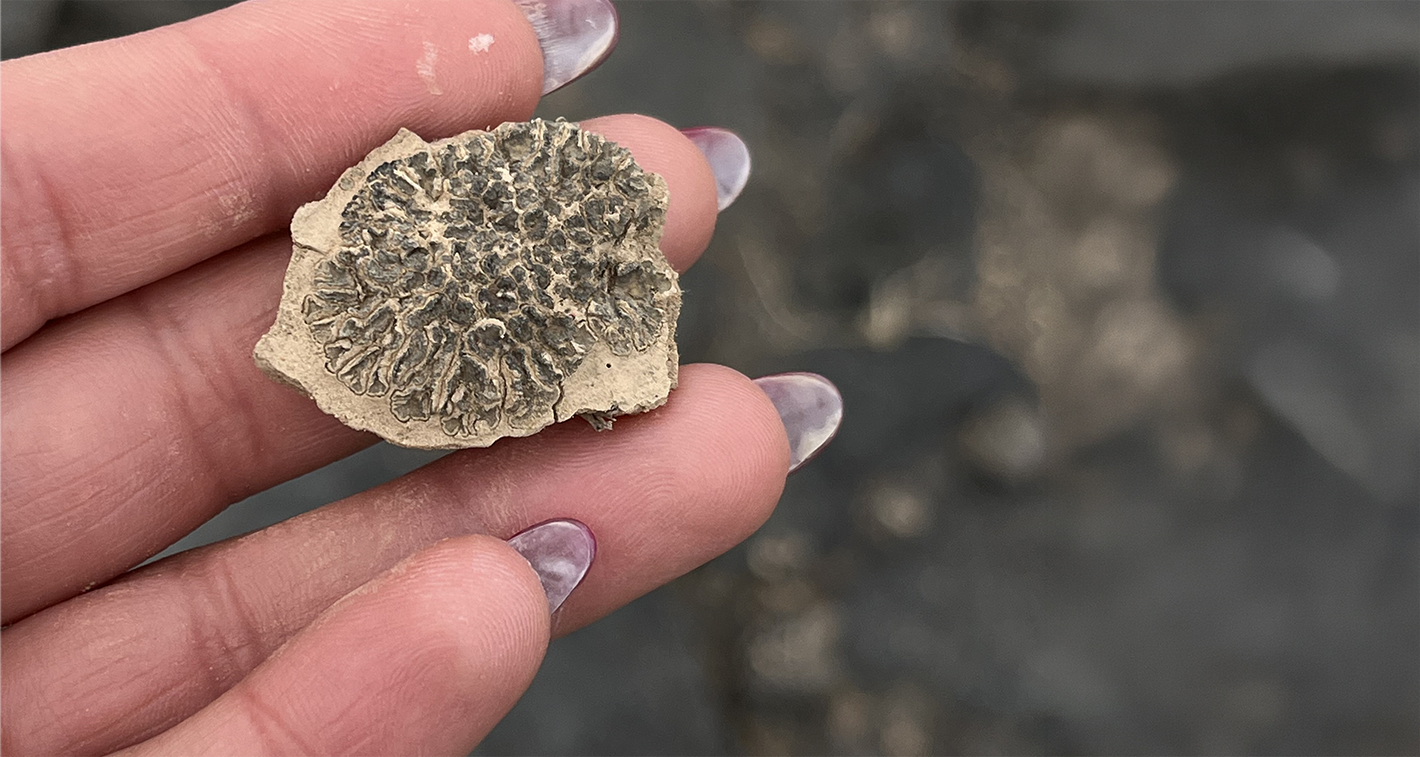
Unlike plants, lichens have neither roots nor stems to draw water from the soil. They absorb water directly from their environment, from rain, atmospheric humidity, or condensation, and can greatly reduce their metabolic activity when conditions become too dry.

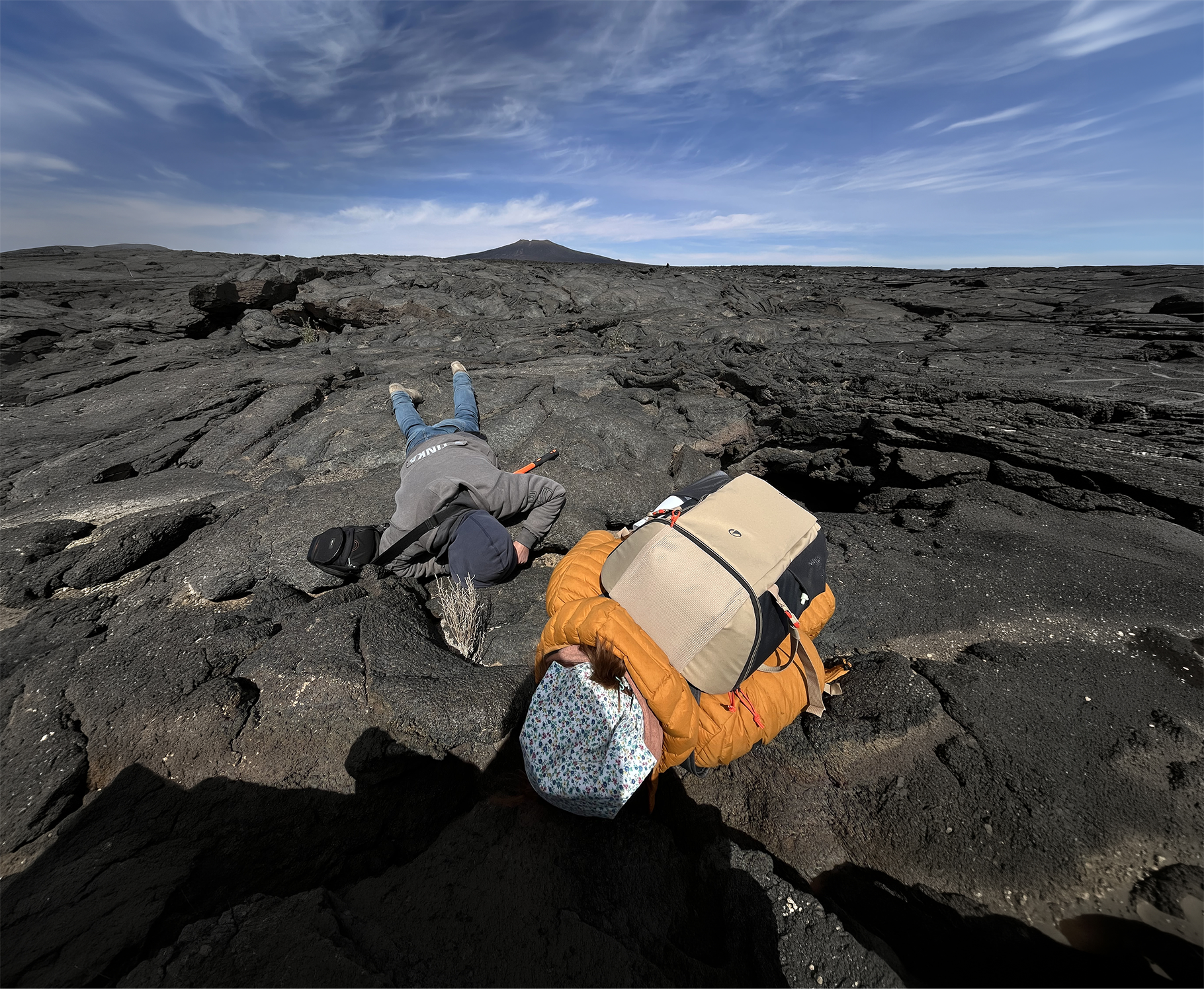
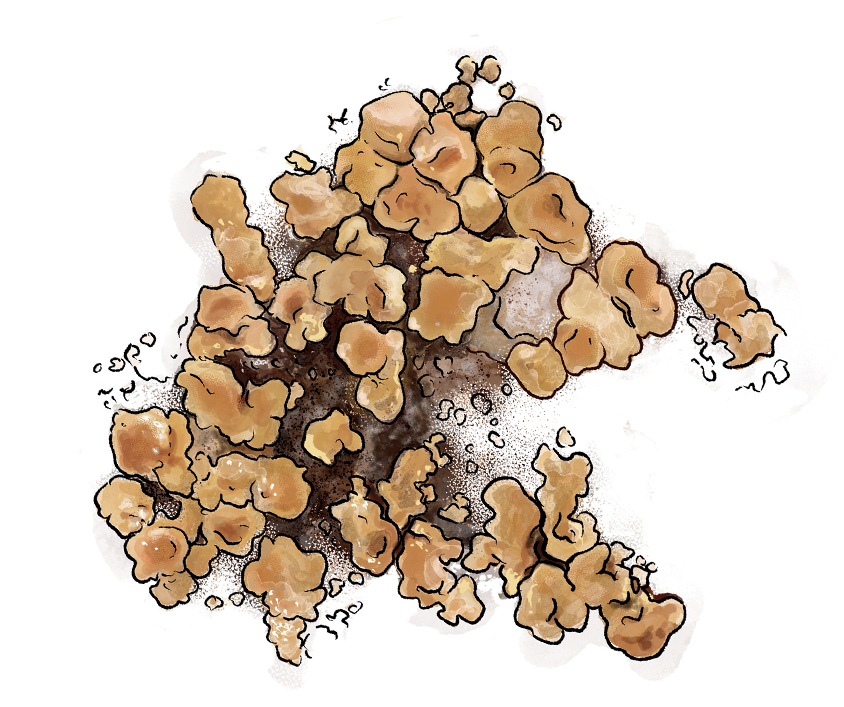
Peltula euploca, for example, retracts against the rock and enters a state of near-dormancy during prolonged dry periods, resuming their activity when moisture returns. Acarospora lavicola, whose name evokes its affinity for volcanic environments, forms sulfur-yellow patches on volcanic rock otherwise devoid of life.

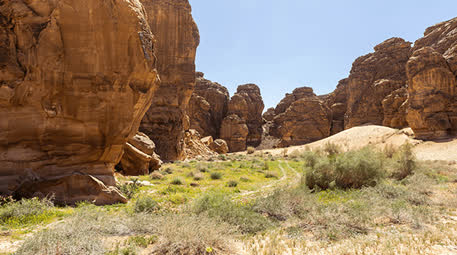
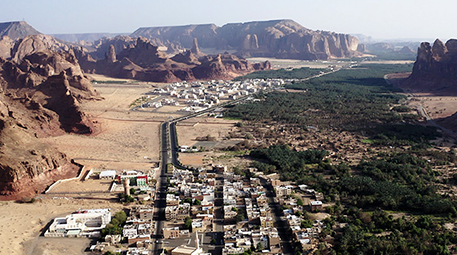
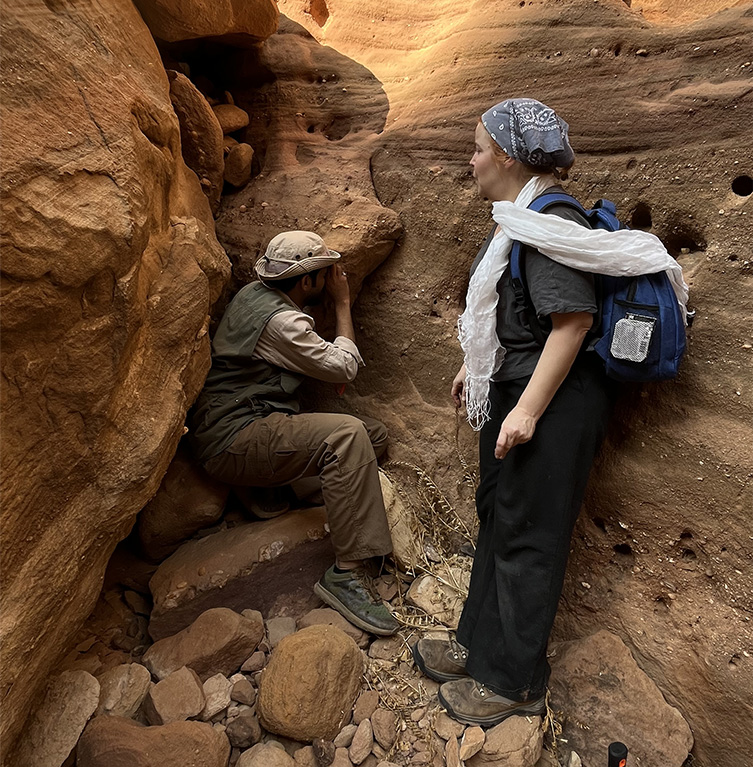
The geological and topographical diversity of AlUla and Khaybar creates a variety of microhabitats and microclimatic refuges for lichens in this extremely arid desert environment. These include fissures in basalt plateaus, shaded sandstone canyons, seepage zones, spring systems, runoff channels, sheltered rock faces and high-altitude mountain environments. Lichen diversity is therefore closely associated with the diversity of available substrates.

THE ART OF SURVIVING ON VERY LITTLE

lichens an atlas of microscopic life (photo 11)

Lichens are formed through a symbiotic relationship between a fungus and a photosynthetic partner (a microscopic alga or cyanobacterium). The fungus forms the protective structure of the lichen, while the photosynthetic partner synthesizes carbon compounds that provide nourishment. This relationship allows lichens to colonize some of the most challenging environments on the planet. Prolonged drought, wide temperature fluctuations and intense solar radiation: these are all conditions characteristic of desert environments, and many lichen species are remarkably well adapted to these conditions.

Long overlooked in biodiversity inventories,

lichens are a remarkable component of arid ecosystems.

Inconspicuous yet remarkably adapted to extreme conditions,

they contribute to the ecological functioning of desert environments,

while their study provides valuable insights into biodiversity and conservation.

Following the first comprehensive lichen inventory conducted

in AlUla and the Khaybar Geopark, the Atlas of Lichens presents

twenty representative species selected from more

than 100 taxa recorded across the region.

Long overlooked in biodiversity

inventories, lichens are a remarkable

component of arid ecosystems.

Inconspicuous yet remarkably

adapted to extreme conditions,

they contribute to the ecological functioning of desert environments,

while their study provides valuable

insights into biodiversity

and conservation.

Following the first comprehensive

lichen inventory conducted in AlUla

and the Khaybar Geopark,

the Atlas of Lichens presents twenty

representative species selected

from more than 100 taxa

recorded across the region.

lichens an atlas of microscopic life (photo 12)

OF MICROSCOPIC LIFE

LICHENS, AN ATLAS

MICROSCOPIC LIFE

AN ATLAS OF

LICHENS,

Land and natural heritage

lichens an atlas of microscopic life (photo 13)

BACK

Share this article

You might also like

lichens an atlas of microscopic life (photo 14)
lichens an atlas of microscopic life (photo 15)
lichens an atlas of microscopic life (photo 16)

DATES AND CITRUS

FRUITS VALUE-CHAINS

WITH HIGH ADDED VALUE


Read

RESTORING THE DESERT

OF ALULA


Read

THE CHALLENGE

OF SUSTAINABILITY


Read

lichens an atlas of microscopic life

lichens an atlas of microscopic life 700 442 Horizon Afalula

Leave a Reply